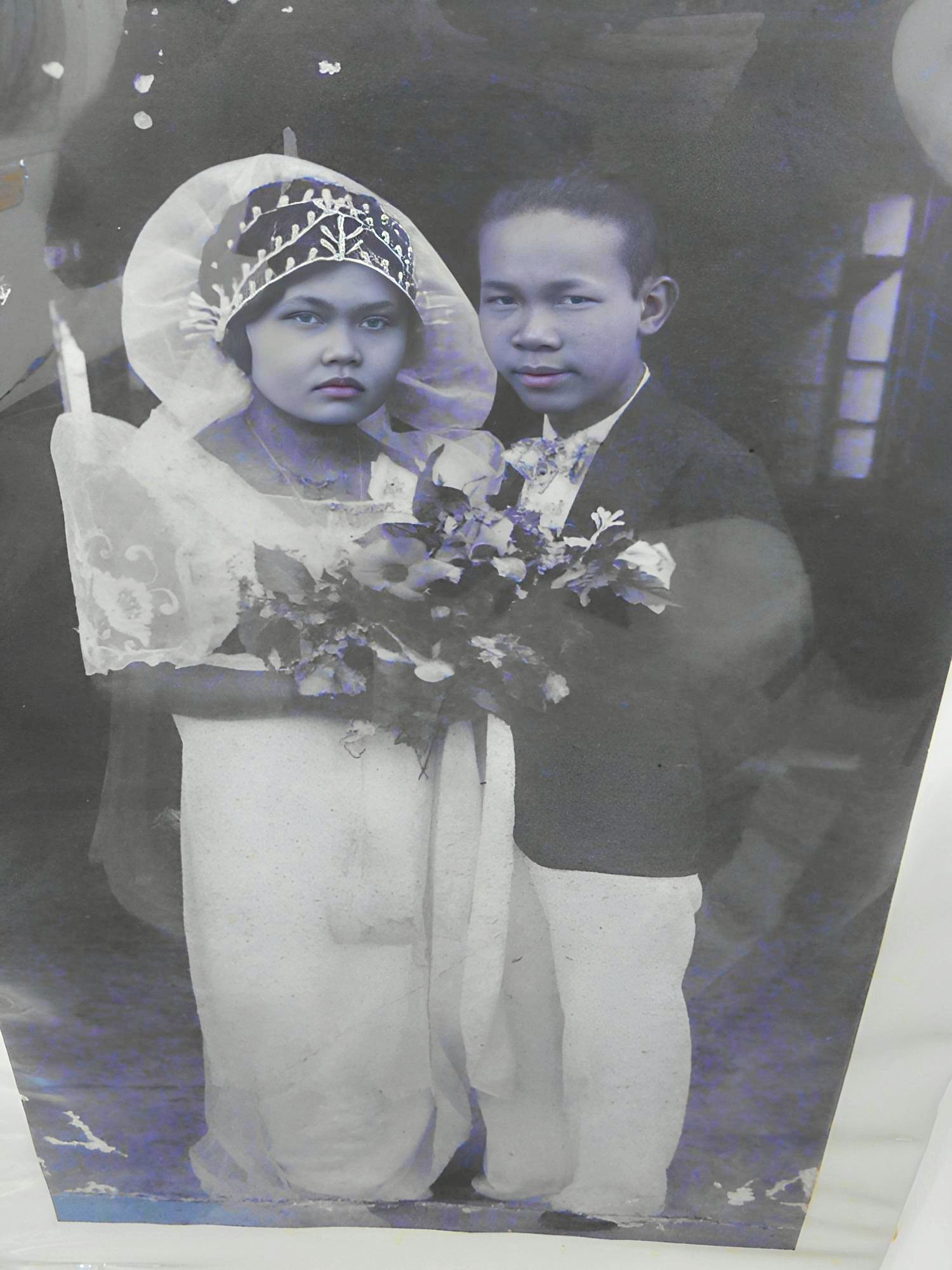

One of the first marriages after the ban was lifted
Echoes of an Ancient Curse
In the Old Testament, God spoke of them to Moses; in the New Testament, Jesus miraculously cured ten. In antiquity, many bizarre efforts – including bee stings – were attempted as cures. It was only relatively recently that an effective treatment was discovered for leprosy.
They inspired fear and revulsion and were obliged to warn of their approach by ringing a bell or shouting: “Unclean, unclean.” Forced to live apart, they were shunned, isolated and ostracised.

An early photo of one of the wards
The Archipelago’s Outcasts
Sympathy is easy; empathy far harder. How did it feel to be diagnosed when there was no cure and you were sent far away from family and friends? A visit to what was once the world’s largest leper colony opens a small window onto that nightmare.
In the early 1900s, the American administration—having bought the Philippines from Spain for $20 million—passed a segregation law and selected Culion as a central leper colony. Medical teams toured the archipelago identifying those infected, who were then forcibly transported to the island by the coastguard.
It began with one American doctor, four French nuns, improvised buildings, and no cure. Soon the population grew to seven thousand men, women, and children. Reminders of that unhappy past remain everywhere, and many locals are directly linked to it: the rickshaw driver’s parents were patients; so were the hotel owner’s father, the pharmacist’s mother, the museum caretaker’s father, and both grandparents of the evangelical pastor.

Pastor Hermie’s grandparents were patients on the island.
Life Behind the Gates
Buildings from that era still stand. Part of the old sanatorium functions as a hospital, while another section houses a museum filled with harrowing reminders of profound suffering.
Yet small lights shone through the darkness. Over time, the colony evolved into a functioning town where patients ran much of daily life. An elected council advised the governor, while lepers served as police officers and firefighters. Able-bodied residents built roads, managed the post office and communal kitchen, and enlivened Sundays with orchestral recitals, plays, and dances.
Even so, their isolation was absolute—symbolized by the mandatory use of a special colony-only currency.
The town was divided into upper and lower sections. The upper housed patients and medical staff, while the lower accommodated suppliers of goods and services. Heavy gates prevented physical contact between the zones, and a local prison punished violators.

The examination room with its primitave machines.
Sexual segregation was strictly enforced, causing immense psychological suffering. To protest a ban on marriage, men once burned down the women’s dormitories. Marriage was eventually permitted, but newborn babies were immediately removed for fear of contamination. Parents could see their children only on Sundays, viewing them through a glass partition.
World War II brought further tragedy under Japanese occupation. Fearful of infection, soldiers visited only once, but shot anyone attempting to escape. Many died during these years—mostly from starvation—and were buried in mass graves.
A Healing Town
Those dark days are gone. Multi-drug therapy brought a cure in the 1980s, and the upper town expanded. Neat tin-roofed cottages known as tenements were built to house hundreds of negativos (cured patients) and their families. Many still bear visible signs of the disease. These homes surround a peaceful, tree-lined square where the communal kitchen, theatre, and bandstand once stood.

The old cemetery reserved for lepers: isolated even in death
Once a melting pot of cultures and dialects, the island has grown more homogeneous. Many of the current 20,000 residents arrived after the disease receded. Culion is now relatively prosperous: the bay hosts a large pearl farm, tourism is growing, and the surrounding waters are rich in fish.
Heritage tours are led by locals like Pastor Hermie, whose grandparents were patients on the island. The town features a 17th-century Spanish fort, a 19th-century church, coastal mangroves, and spectacular island views. Above all, its people are relaxed, welcoming, and open to sharing their dramatic history. Culion is finally becoming what it long wished to be: an island like any other.


Photos from the Museum

Departing the Bay
As I depart, I think of my luck compared to the tens of thousands who were never able to leave, their lives destroyed without ever understanding why.
From the stern of the boat I look back one last time: at the statue of Christ the Redeemer on the hill, arms outstretched, and at the old cemetery overlooking the bay—a silent reminder of pain and blighted lives.

Looking across the bay: in the distance ‘The island of no Return’