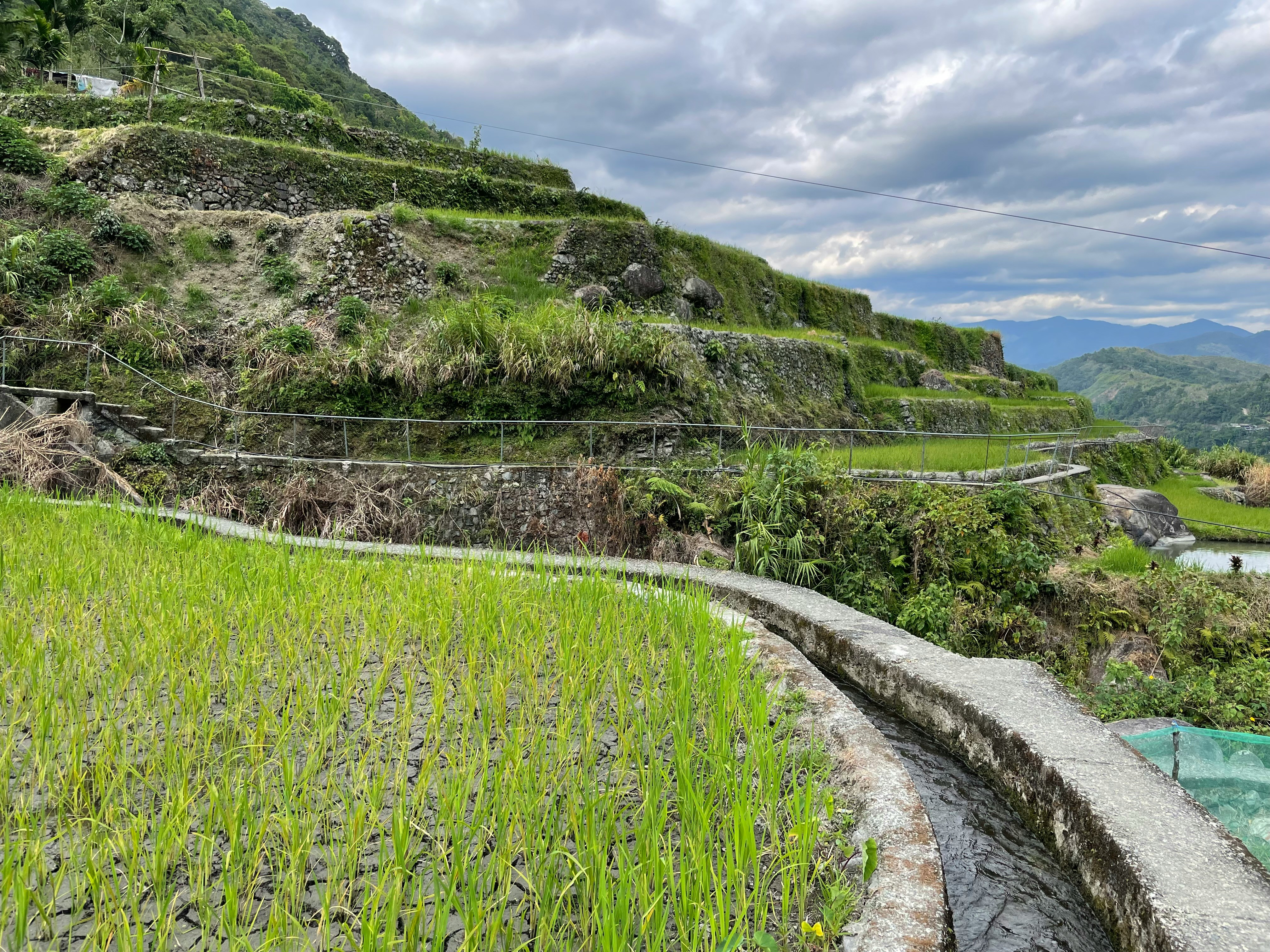
This piece was written recently from notes made in mid 1970s when I visited the Philippines for the first time. I did not have a camera then and so asked AI to create some images from my descriptions. Not exactly as I remember it but it gives some idea. I imagine things have probably changed since then. The text is completely mine, I accept full responsibility.

Photo by Omri D. Cohen on Unsplash
Chronic Curiosity
A dozen jeeps parked outside the village schoolhouse were enough to trigger my incurable condition: chronic curiosity. Standing by the entrance was a teenage girl whose tight t-shirt bore the bold, bra-accentuated proclamation: Praise The Lord.“It’s the Governor of the province,” she informed me, adjusting her piety. “He has come to listen to our problems.”Naturally, I followed the problems inside.
Hijacking the Ancestors
The school’s internal partitions had been pulled back to create an impromptu hall, which was already three-quarters full. The crowd was overwhelmingly young, with a small number of middle-aged men and a few older women. Notably absent were the village elders. It was a glaring omission, and one I suspect the Governor noticed faster than anyone else. By showing up here, he wasn’t just holding court; he was going beyond their traditional monopoly on wisdom. Why consult the ancestors when you can appeal to a bureaucrat?
The Retaining Belt
The Governor sat enthroned behind a school desk at the front of the room. Beside him sat the village mayor, a young man so fashionable in denim he looked like a walking advertisement for Levi Strauss. The Governor himself was a retired brigadier-general.
“He fought with the President,” someone whispered to me, as if explaining a holy relic.

In his prime, he must have been a dashing advertisement for the military: tall, with a classic swept-back mane of wavy hair, a sharp nose, and a jawline that could cut glass. Time and gravity, however, had changed things. The jawline was now rather jowly, the eyes were bagged, and his stomach sagged so that his belt was like a retaining wall. He was flanked by an assortment of youths from the departments of irrigation, electricity, and roads—all of them indistinguishable from one another, looking like a chorus line of nervous trainees.
M16s and Loincloths
The proceedings kicked off in a mix of Ifugao and English. Petitioners would step to the front, execute a series of deeply respectful, almost acrobatic gestures of deference, and state their case. The very first grievance was brought forward by a man in full army fatigues with an M16 casually slung across his back. The middle-aged civilians, meanwhile, opted for a more restrained fashion statement: traditional loincloths paired with Western-style button-down shirts.
Through it all, the Governor listened affably. His plump left hand maintained a transit between a plate of sweetmeats and his mouth, popping them in one by one. His gold watch and heavy rings caught the light as he chewed. When complaints about very bad roads and leaking water pipes grew too specific, the Governor would lean toward the denim-clad mayor to share what seemed a private joke. Sometimes he would wave a sugary finger at his subordinates, directing them to answer; at other times he would decree an answer himself, speaking sometimes with his mouth full of cake. He occasionally cracked a joke, making the room erupt in dutiful laughter. He was, above all things, professionally affable.
Imprisoned Gongs

Then, an intermission was called for traditional dancing. Two men began a primal, metallic thumping on bronze gongs. A brief flurry of frantic whispering and “you go first” elbowing broke out among the women. After a failed attempt to drag some reluctant older men onto the floor, four women finally took the stage alone.
It was a rhythmic, strangely captivating dance, though the booming of the gongs felt trapped within the walls of the schoolhouse. With their left arms extended, the women flicked their wrists, letting their hands flap like wings. They cocked their heads toward their extended arms, chins firmly pinned to their shoulders, while their right elbows pumped furiously against their ribs as if they were playing the Scottish bagpipes. They executed tiny, shuffling steps—forward, backward, circling—before a sudden extension of both arms signaled a swirling U-turn in the opposite direction. Born in the mountains, the dance looked imprisoned by the classroom. The Governor clapped with polite, plump hands.

Mandatory Good Humor
When the floor reopened for questions, a remarkably persistent woman took the mike. Unsatisfied with the Governor’s vague platitudes, she continued to press her point with fierce tenacity until her embarrassed friends physically restrained her and pulled her back into line. With a quick, well-practiced quip, the Governor defused the tension, restoring the room’s mandatory good humor.
Grand Finale
Finally, the grand finale: lunch. Three massive, industrial-sized saucepans were hauled into the room. The first contained thick slabs of pork fat and skin boiled in a sauce that looked positively dangerous. The second held chunks of caribou swimming in a dark brown gravy topped with a thick, shimmering slick of oil. The third held the rice.

The rice was distributed on paper plates, though the locals preferred a length of bamboo split cleanly down the middle. Heavy ladles of meat and sauce were slapped onto the rice, and everyone dug in with their fingers. The Governor, his appetite thoroughly ruined by two hours of continuous sweetmeats, no longer looked hungry. But his rings kept shining, and he kept on smiling.
