
The sights, sounds, and scents of water were etched into his senses from his earliest days: a physical connection. That longing to be near the it remained a constant throughout his life. He grew up on the banks of the upper Shannon waterway in Ireland, in a home simply known as the “lock-house.”
Family lore, passed down by a paternal aunt, painted a romantic picture of how they came to be there. Across the river stood the Royal Irish Constabulary (RIC) barracks. His grandfather, stationed there while Ireland was still under British rule, supposedly left the force to be with a local girl he’d fallen in love with. The reality of how he became a lockkeeper was likely more mundane, but the myth mattered more than the facts.
He presided over Clarendon Lock—named for the British Viceroy of the time—the final locks at the waterway’s northern end. Along with a pittance of a wage, his grandfather received the lock-house and a strip of land just large enough to graze a single cow. In exchange, he operated the gates, tracked water levels, and recorded the weather in a heavy ledger provided by “The Shannon Navigation.” That same ledger remained in use throughout the boy’s childhood, enduring until his mother’s eventual retirement.
The river system itself was a part of history, reconfigured during the Great Famine. The locks were added in 1846 and 1847, partly to improve navigation and partly as “public works” to provide a desperate living for those dying of hunger.
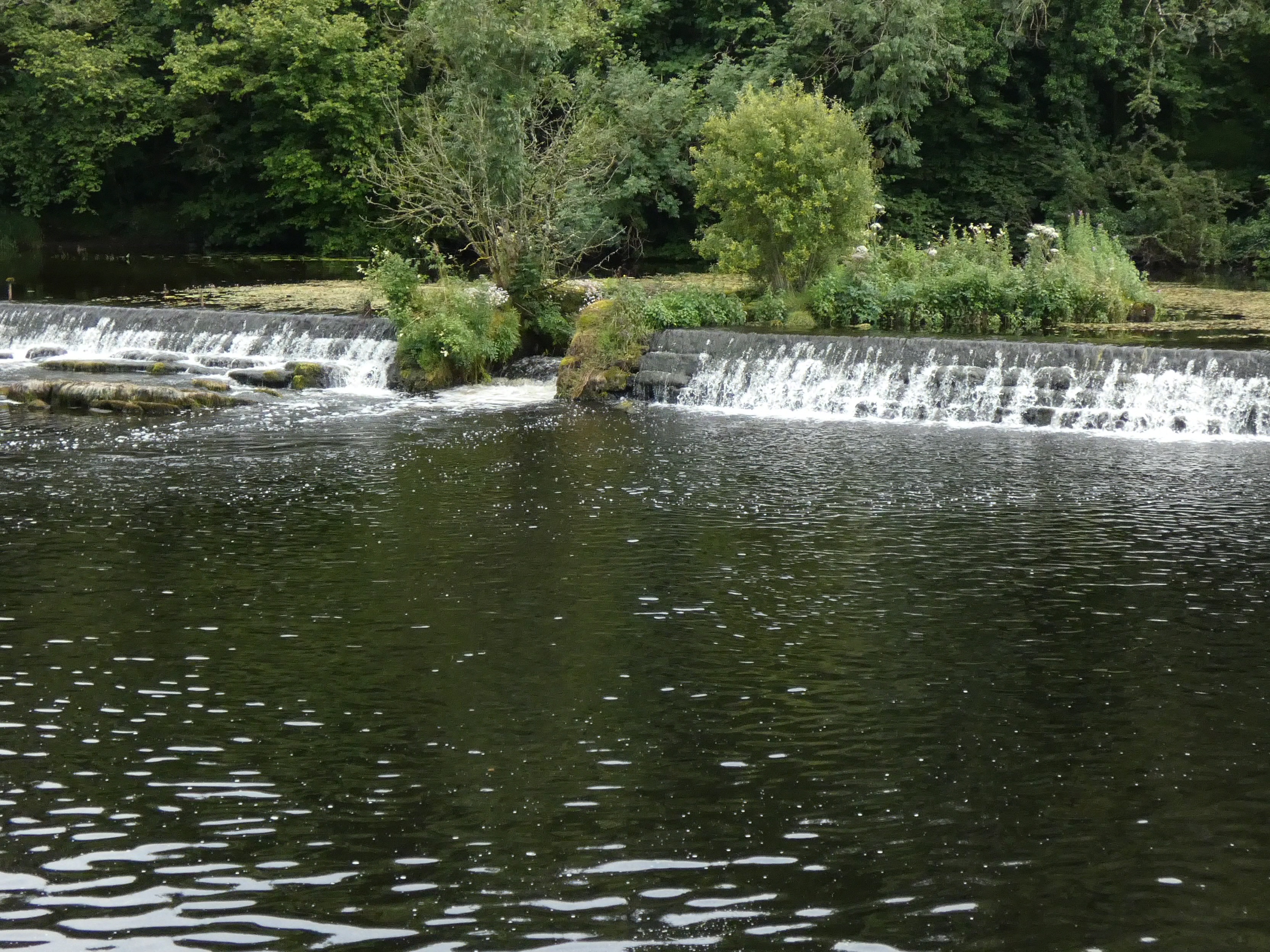
Their house sat just meters from the bank. From his bedroom, he could hear the gentle gurgle of the “back river” spilling over stones before it merged with the “new” river. This back river was magical—the original, ancient path of the water. In the century since the new cutaway had been dug, the old branch had been left to its own devices, developing a wild, secret personality.

While the new river was a straight, deep famine-era cut, the back river, at its beginning, gushed lustily over stones near the weir. It was where he had his most memorable fishing moment. There he had caught a three and a half pound trout. He played it for about twenty minutes struggling to keep it clear of some fallen branches that wily fish always dashed towards to escape. Proudly the walked back barefoot across the weir to the locks where a boat waited to pass. The skipper of the boat offered him five shillings for the fish – about €10. He was terribly tempted by the money but pride got the better of him, he wished even more strongly than the money to take it home to show it to everybody.

It was a kingdom of fascination: deep pools where pike with massive jaws lurked, and shallow stretches where small trout hovered against the current. Occasionally, an eel would scamper into the weeds. Overhanging branches and choked vegetation turned the land between the two rivers into an isolated island. Access was difficult, and fishing was a challenge. He never met another soul there. He loved it.
His father, and eventually his mother, took their turns as lockkeepers. Until the 1960s, boat traffic was almost non-existent, save for a few private cruisers belonging to wealthy Dubliners. To reach the locks, one followed a narrow gravel path overhung by trees. To the boy, this was his private domain. He remembers in summer kicking barefoot through the puddles after rain and the smell of “oxygen” lifting off the foaming weir—a sharp, fresh scent that made his nose twitch.

He started fishing young with a simple bamboo rod. The river became his sanctuary, perhaps a necessary escape from a house filled with five sisters and his mother. It was his closest friend, a silent companion that once almost claimed him in a near-drowning when he was nine. He couldn’t swim, yet he never feared it. He simply learned to spend his time alone with the water, seduced by its quietness and lazy rhythm.