Iwahig: An Open-Air Republic of the Condemned
A Wandering Celt reflection
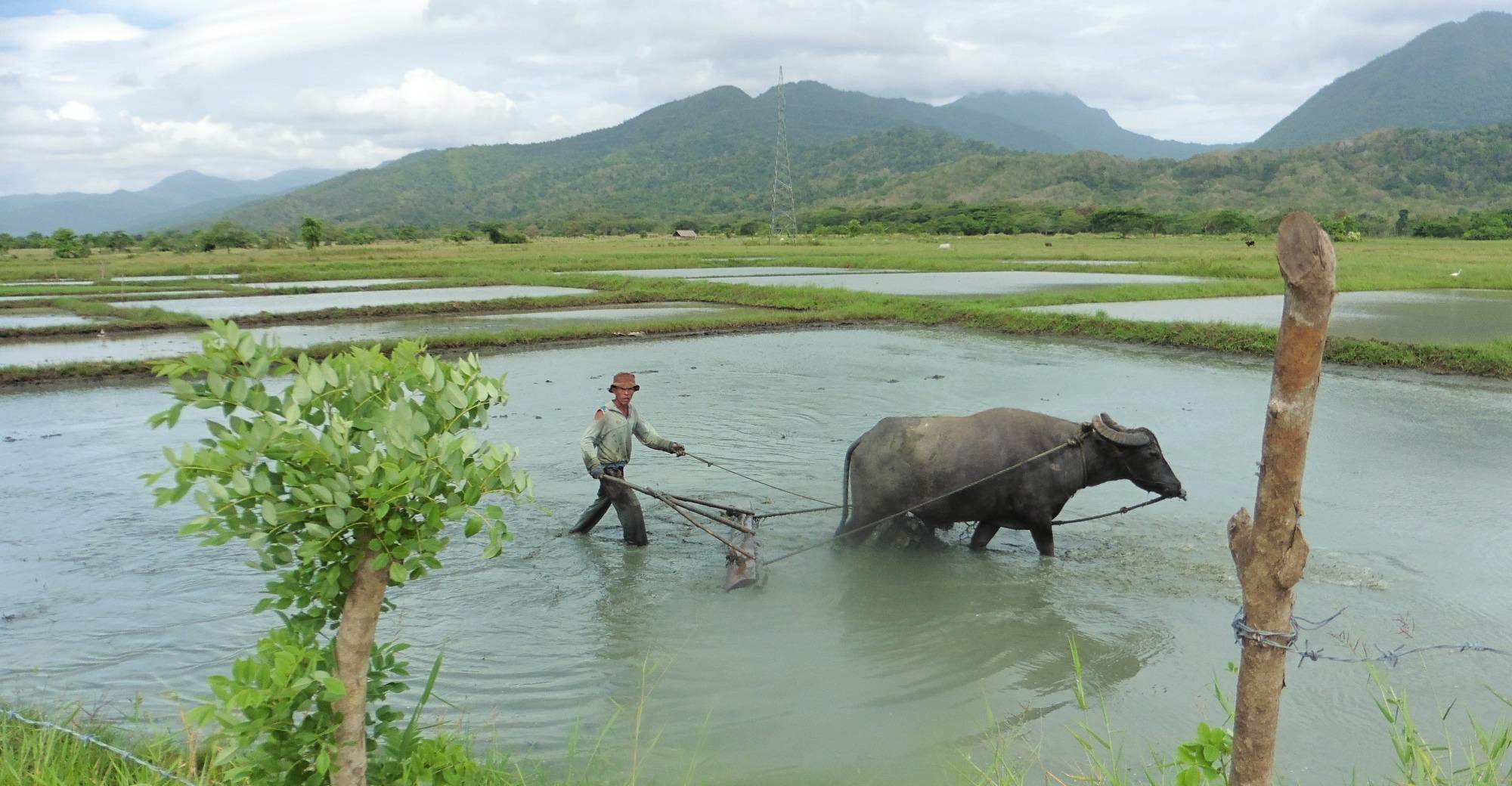
The first thing I noticed after entering the Iwahig open-air penal colony on an island in the Philippines was the different colours -hundreds of inmates wearing blue and brown shirts – different colours for different security levels. They were moving slowly through the flooded paddies, men standing knee‑deep in water with the mountains rising behind them as a backdrop. Two guards watched from the shade of roadside trees, rifles resting idly beside them. One of them, grey‑haired and limping, seemed grateful for company.

I asked the the older guard, who seemed glad of conversation, what happened if a man tried to escape? The mountains were close, I said. “They wouldn’t go there. Malaria.” But he continued, “Easy to reach the town. But they’re usually found. There’s a reward.” One man made it to Malaysia for eight years before being turned in when he came back. Minimum‑security inmates were meant to shout if someone ran; then the guard would chase. But he was fifty‑eight, arthritic, in flip‑flops. “They’re no different from us,” he said, looking at the men—most imprisoned for murder. Visits from wives and girlfriends were allowed. “Made in Iwahig,” he said, “on many children around here.”
Iwahig calls itself an open penal colony, but the word open feels too thin for a world so complex. Three thousand men live and work across its 200 acres. The blue‑clad farm the land. The brown‑clad, carrying long wooden sticks, help supervise, do the cooking and other jobs. The maximum‑security men remain behind walls and I never saw them.
Along the road towards the administration centre, Francisco — twelve years into a sentence for robbery and murder — ran toward me with a string of shells and a boar’s tooth. He smiled as if the world was still a happy place.

I went to report to the Head office. Mandrinan Fey, the administrator, grew up in the prison. From the veranda of her office, she pointed to the school where she once sat beside inmates’ children. “No distinction between us,” she insisted. Her father, a former superintendent, gazed down from a framed photograph. “Why escape?” she asked. “They have food, freedom to move, television. There is no violence.”
I stopped to talk to the prison chaplain who was in his garden in front of his picturesque church. I asked what the inmate helping him in his garden what he was in for. The man, overhearing, pointed his finger like a child playing at guns and went: “Bang, bang.” The chaplain said he was in for murder.

When I asked whether innocent men lived here, the administrator had answered instantly: no. The chaplain paused. “I don’t know about innocence,” he said softly. “But every man here is poor. None of them could afford a good lawyer.”
I stopped a man on a bike, to ask for directions, An ex‑bodyguard, jailed for murder, he laughed when I remarked that he was small for a bodyguard. As he cycled away he shouted over his shoulder, “Small, yes — but quick on the trigger.”
Some stories shook me. Jason, serving double perpetuity, had been nineteen when two men broke into his home, raped his mother and sister, shot them, and left him for dead. He showed me the bullet scars on his neck. When he recovered, he found the men and killed them. Now, twenty years later, he dances for tourists — tattoos coiling up his arms, eyes burning with, it seemed to me, an anger that keeps him going.. He sells trinkets afterward, smiling for photographs. He has no idea if he will ever leave. He doesn’t attend the Moral and Spiritual Centre.

Others wait more quietly. A man carrying vegetables told me he was one of the cooks and would be released soon. “We feed ourselves,” he said. “Chickens, gardens.” It was near the end of a 25-year sentence for murder, and he wouldn’t tell me more. He laughed heartily when I remarked that it surely was not for killing a chicken that he was in prison.
Another, known as “Little,” tall and dignified, was the only one who insisted he had been wrongly convicted. His mother, now seventy‑eight and living in Manila, had never been able to visit; she never had the money. He asked if I came back to bring him soap and toothpaste.
When I finally rode away, it was the image of Jason that stayed with me — young, scarred, handsome, dancing for groups of tourists, his tattooed arms outstretched – the word ‘yearning’ came to mind -toward a woman taking his photograph.