We walk down a country lane fringed with swaying coconut palms and lush vegetation through which the Indian Ocean glimmers. I am with Das, a part-time handyman from a nearby hotel, on a coastal path in northern Madagascar.
Das is alive to everything around him. He shows me wild, parasitic chilli peppers climbing, and clinging to an unsuspecting tree and explains how the ylang-ylang leaves we pass yield essential oils used in French perfumes. He points out cocoa trees, tells me how their nuts become chocolate, and names every plant, flower, and everyone we meet. His remarks at times, provoke bursts of laughter from girls hidden among the greenery.
When I suggest we go fishing, his eyes light up. We agree on the following morning.

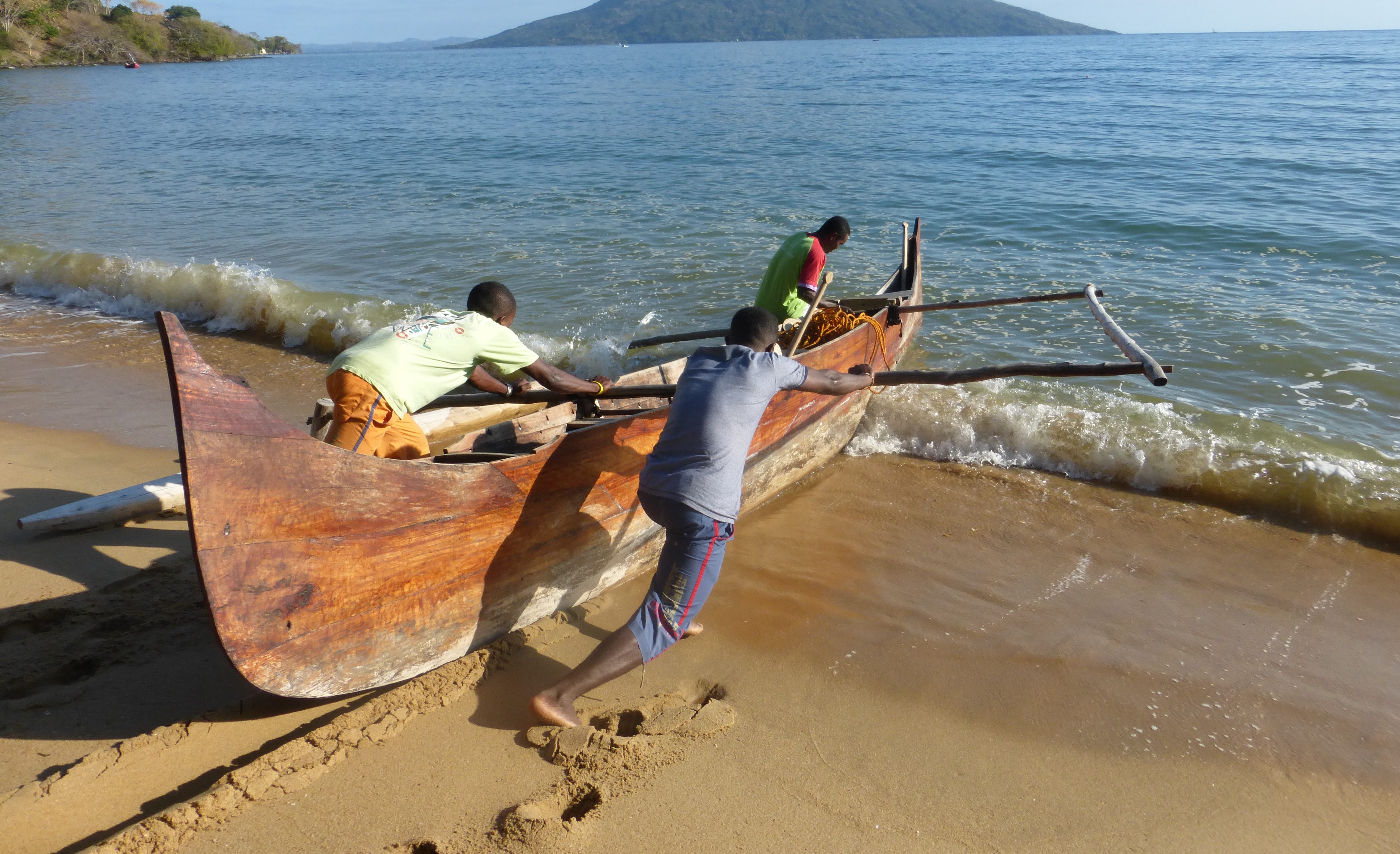
At seven, with the high tide, we push the hotel’s outrigger pirogue into the sea. It’s the same kind of boat used by the first settlers who came here from Borneo fifteen centuries ago. Malagasy people hold fast to such traditions that whisper of Asia and suggest that they are not like other Africans.
It’s been years since I paddled and my muscles protest almost immediately. Das, unfazed, chats and laughs as he paddles. He gossips freely about the inhabitants of every coastal house we pass. There’s the German whose Malagasy wife vanished with his money, a hut haunted by an “unquiet spirit,” and another home he built himself.
The boat takes on water — its planks have shrunk after months on the beach. Das bails with a silver ice bucket borrowed from the hotel. “Communist,” he jokes. “Everything should be shared.”

We pass a village where, Das tells me, fishing is taboo on Tuesdays and Thursdays — a rule laid down centuries ago by a princess who wanted her men to work her fields those days. Unlike many incomprehensible Malagasy taboos, this one has a practical origin.
Even while talking, Das’s sharp eyes scan the sea. He spots a turtle’s domed shell near the surface, then the arched back of a dolphin. He counts — every five seconds to ten seconds it should surface — until, suddenly, it doesn’t. He looks puzzled; I suppress a smile. He doesn’t know everything, after all.

We bait our hooks with shrimp. I’m the first to catch a fish. Das looks surprised; I tell him I grew up fishing the Shannon River in Ireland. He has no idea where Ireland is. He soon overtakes me, yelling, “Madagascar five! The world two!” The competition is hopelessly one-sided — he has the fishing reflexes, I’ve lost mine. The catches are small but dazzlingly colourful.
Between bursts of laughter, he tells me of his two young children by different women. “All women have the same problem,” he says, mock-serious. “They talk too much.” Passing fishermen wave and shout; Das answers every greeting with gusto.

“I feel free here,” he says, gesturing to the horizon — islands scattered like coloured jewels, mountains brooding in the distance. I assume he means the beauty. “No,” he grins. “No police. No ‘hands-up.’ No ‘stop-stop.’”
The wind has carried us shoreward. In the shallows I glimpse, through clouded water, a great turtle gliding lazily beneath us. I imagine her laying eggs on the beach, covering them gently before retreating to the sea — her young, when born, left to scramble towards the surf, prey to every waiting predator. A brutal first lesson in independence; mother turtle does not play mother duck.
We head back with enough fish to satisfy Das. He names each species in Malagasy — the only one I remember is kakwanga. The tide has ebbed, and we must beach the pirogue far from where we began. I walk barefoot through the soft sand, toes sinking, while Das waits for the tide to rise again.
In the distance fishermen, standing waist-high on a sandbank, are casting their nets. With the midday sun overhead leaving them without a shadow, they remind me of silhouettes in a biblical sketch.

Das, I think, would have made a brilliant teacher — curious, clever, endlessly observant — but a classroom would have been a prison. He is a natural truant, a rogue philosopher. I wouldn’t trust him with my savings, but I’d happily follow him anywhere on the water.
