(The Ghosts of Koh Phi Phi)

The man I met the evening I arrived told me, “Here you smell death everywhere.” He wasn’t exaggerating. Nearly two weeks had passed since the tsunami, yet the air in the narrow streets of Ton Sai still carried a faint, sour trace of what had happened.
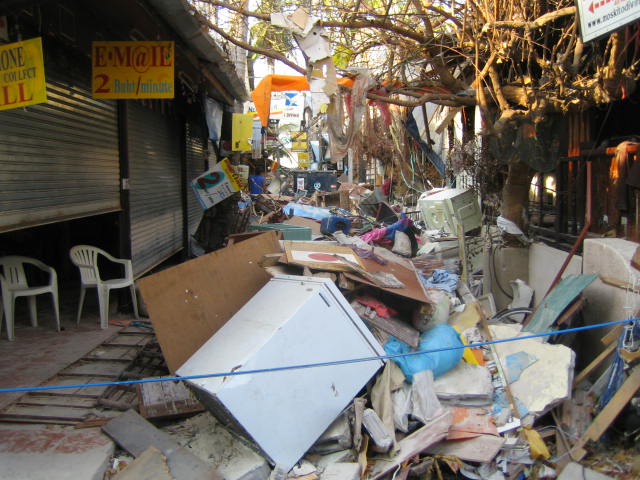
I walked slowly through the village the next morning. There were few people around. Debris lay everywhere: twisted metal, splintered walls, mattresses drying in the sun. But it wasn’t the wreckage that held me. It was the small, personal things the water had scattered — the things that had belonged to someone only hours before the wave hit.

A page from the Cabana Hotel’s Food and Beverage Department lay at my feet. A daily inspection form: “Cleanliness of Body,” “Teeth and Mouth,” “Posture,” “Shave,” “Name Badge.” Thirteen boxes ticked “Good.” Only “Make Up” left blank. It was dated the 26th of December. Signed by the employee and the manager. How long after signing it did the wave come? Minutes? An hour? He would have been on the ground floor. Did he survive? Did any of them?

Phi Phi’s beauty had betrayed it. Two bays, only three hundred metres apart, each with its own beach. The western bay faced the open ocean; the eastern bay opened toward the limestone cliffs of Phi Phi Leh. The wave squeezed through the narrow western inlet, rose in the shallows, gathered itself, and tore through the village before rushing out the other side. The flimsy prefab rooms — built for sleeping, not living — simply collapsed.

People were picking through the debris, turning over clothes, utensils, toys. They ignored the dozens of computer screens outside the ruined internet cafés. They were looking for things they could use. Many wore mouth masks, though the smell was faint now.
The most poignant objects were the smallest: a set of colouring pencils spilled across a hut floor; a shower cap still in its plastic holder; a Marion Keyes novel; a video with Sean Penn and Michelle Pfeiffer on the cover; chopsticks; a child’s bathing suit top with tiny silver stars and a tinsel heart. I picked up a CD — the rapper Nas, still wrapped — and for a moment thought of keeping it as a souvenir. Then I put it back. It felt wrong.
Divers from Bangkok were working in the bay, attaching ropes to submerged objects. A small crane on the jetty hauled up a trolley cart used in the village’s narrow lanes. Snagged in its mesh was a cotton shoulder bag. One of the young divers emptied it onto the pier: a diving mask, snorkel, phone, credit card, purse with a little money, lipstick, nail polish remover. “Phuying, phuying,” several onlookers murmured — girl. The diver joked that the phone was “cheap, cheap,” but when he handed the items to the dive master, the phone and purse had disappeared.

That evening I ate at a restaurant on the beach, the table legs almost touching the water. The moon was rising over the bay, softening the jagged outline of Phi Phi Leh. There was fish on the men but the waitress apologised: no fish. She pointed out across the water. There were still bodies in the bay, she said. More than two thousand people were unaccounted for and would remain so. The fish were were there too. Her meaning was clear. “And the ghosts,” she added quietly. People saw them at night. They were unquiet spirits, she explained, they had not had proper religious rites.
I contemplated the bay as I ate my chicken dish. Wisps of vapour drifted across the moonlit water. Of course there were unquiet spirits; most of them were far away from home.
