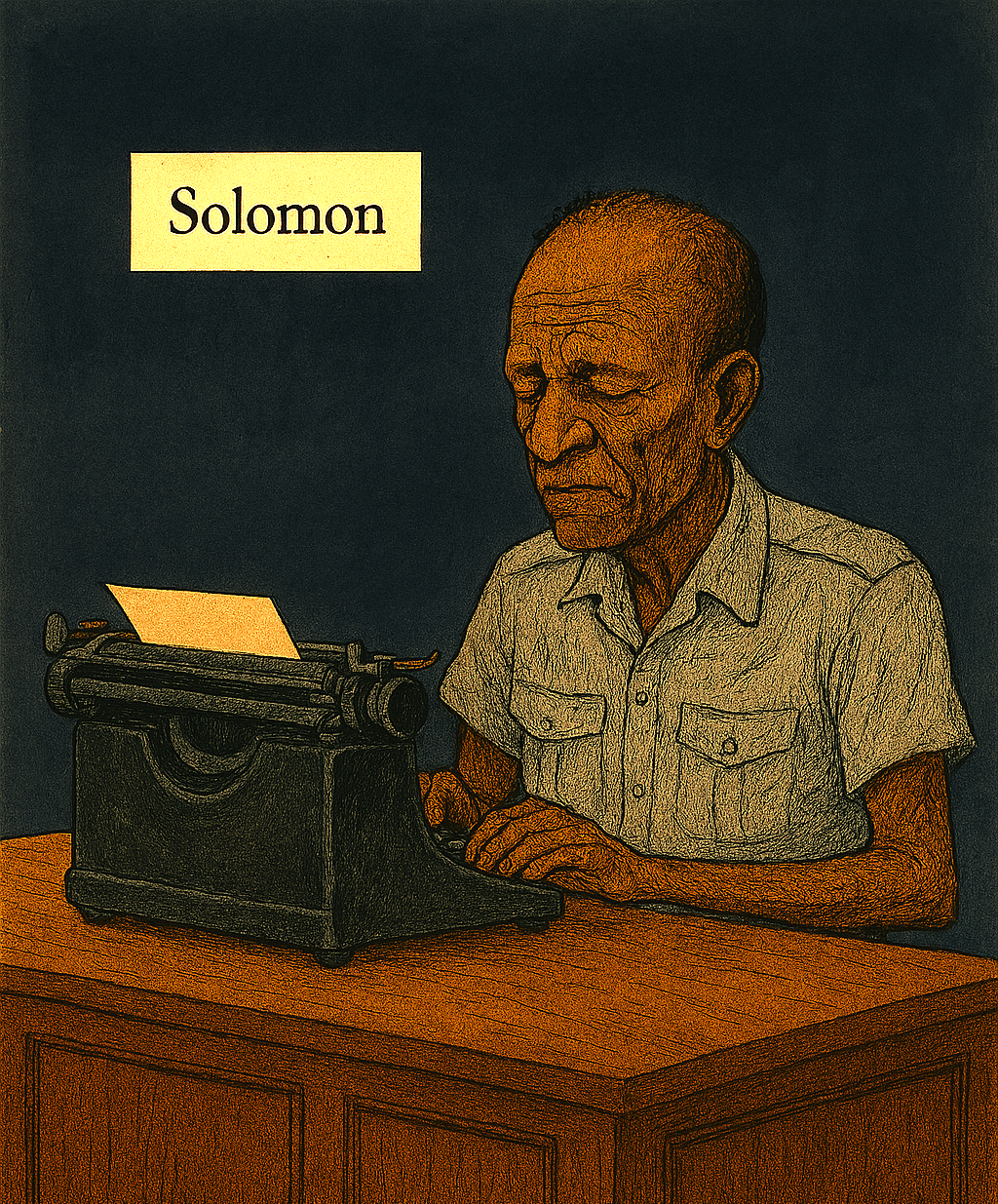

The image is generated by AI, the text definitely is NOT.
Night Taxi Odyssey
Most African countries have their Solomon, usually a Godlike president but with a bigger paunch – especially if he has been in power for 50 years. Then he exudes wisdom even in his sweat, as he works tirelessly for his beloved people! My African Solomon is a simpler version.
Beira Airport, 2:30 am. Our flight from Maputo had landed hours late. Only a handful of taxis lingered outside in the humid dark. The Portuguese businessman sitting next to me had pre-booked one. I asked if I might share. Arriving at his hotel, he paid the driver generously — there are no meters on Beira taxis.
The sly-looking, corpulent driver then took me home. I offered what seemed a fair fare from the hotel, adding extra for the late hour. He exploded in indignation. For him, I was an airport fare, full price. Exasperated, I suggested we go to the police, hoping to shock him into reason. “Right!” he said immediately, eyes gleaming. I offered a little more to defuse things, but he had worked himself into a righteous fury. I surrendered to the idea of “que sera, sera.”
Solomon the Policeman
The policeman at the night station looked as any policeman might at 3 a.m. — half-asleep and deeply irritated to see us. An elderly white man with battered Portuguese, and an angry, overweight taxi driver. The officer listened impassively as we each made our case. After 20 minutes, he declared it too complicated for him and sent us to the central station.
On the way, the taxi driver growled that I’d have to pay for the police trips too. I began, reluctantly, to admire his nerve. At the central station, he tried strained jokes with the indifferent policemen and even made small talk about the weather with me. Finally, we were shown into the officer in charge.
Behind a battered wooden desk sat Solomon — as I afterwards liked to think of him — a man whose frayed collars spoke of long years and long nights, working for a pittance. On his working desk was a huge, ancient typewriter – apart from which, his desk was bare. His weary hand waved us forward.
The taxi driver blustered through his case. I followed, my stamina wilting under the effort of speaking infantile Portuguese. When the driver tried to interrupt, Solomon silenced him with a slight but firm gesture. I expected the case to go against me. Surely, I thought, a fellow Mozambican would back his own against a relatively well-off foreigner.
But Solomon spoke quietly. He summarized the arguments and ruled: since the Portuguese businessman had asked the driver to take me, I was not an independent passenger. I owed only what I’d offered. It was the first and only time I saw a man physically deflate, like a balloon losing air. Pressing my advantage, I asked if the driver had to take me home for the agreed fare. Solomon nodded.
I shook his hand on leaving. No smile. The taxi driver was silent on the way back. Feeling magnanimous, I slipped him an extra note when we arrived. He looked surprised, then hugged me and declared me his friend.
A Brother in Beira
After that, whenever and wherever he saw me, he would cross streets, or parking lots to shake my hand, clap me on the shoulder, and announce to everyone nearby that I was a friend and a brother.
I thought of buying Solomon a new shirt but didn’t as it might be seen as paternalistic. I never saw him again. But I remember him fondly and his late-night fairness which might be called wisdom.