
Just this week – August 2026 – the Mozambican Press spoke of more than 30 people been beaten to death in cases of shrinking or disappearing penises. Men, in different parts of the country, who, when someone with bad intentions touched them they felt something happening. From what I understood the problem was more a question of shrinkage than total disappearance. I lived in Mozambique for 14 years and know full well how men can be proud of their penises and the size or otherwise of this object. That is to say, it is a most serious matter!
Serious in the sense that it is, maybe, one of the main ways they feel superior to the white man. They say they may not have the money to buy roses and may not have honeyed words dripping off their lips but they can satisfy, they feel, better than any white man, their girlfriends in bed. Obviously it is not something I can vouch for either way.
Stories of ritual mutilation circulate regularly in Southern African media, shaping fear, folklore, and cross‑border suspicion. A joint study by human‑rights organisations in South Africa and Mozambique reports that male genital organs are the most sought‑after parts, commanding the highest prices among certain witchdoctors in both countries. Other organs — hearts, livers, eyes — do not have the same value.
According to the study, during the period examined, one person every two weeks was mutilated for body parts to facilitate witchcraft practices. Most attacks occur in Mozambique, but the primary market, the organisations say, lies across the border in South Africa. These mutilations are almost always fatal, yet even the dead are not spared: three men were recently arrested in Mozambique for exhuming a body to retrieve parts requested by a witch doctor.
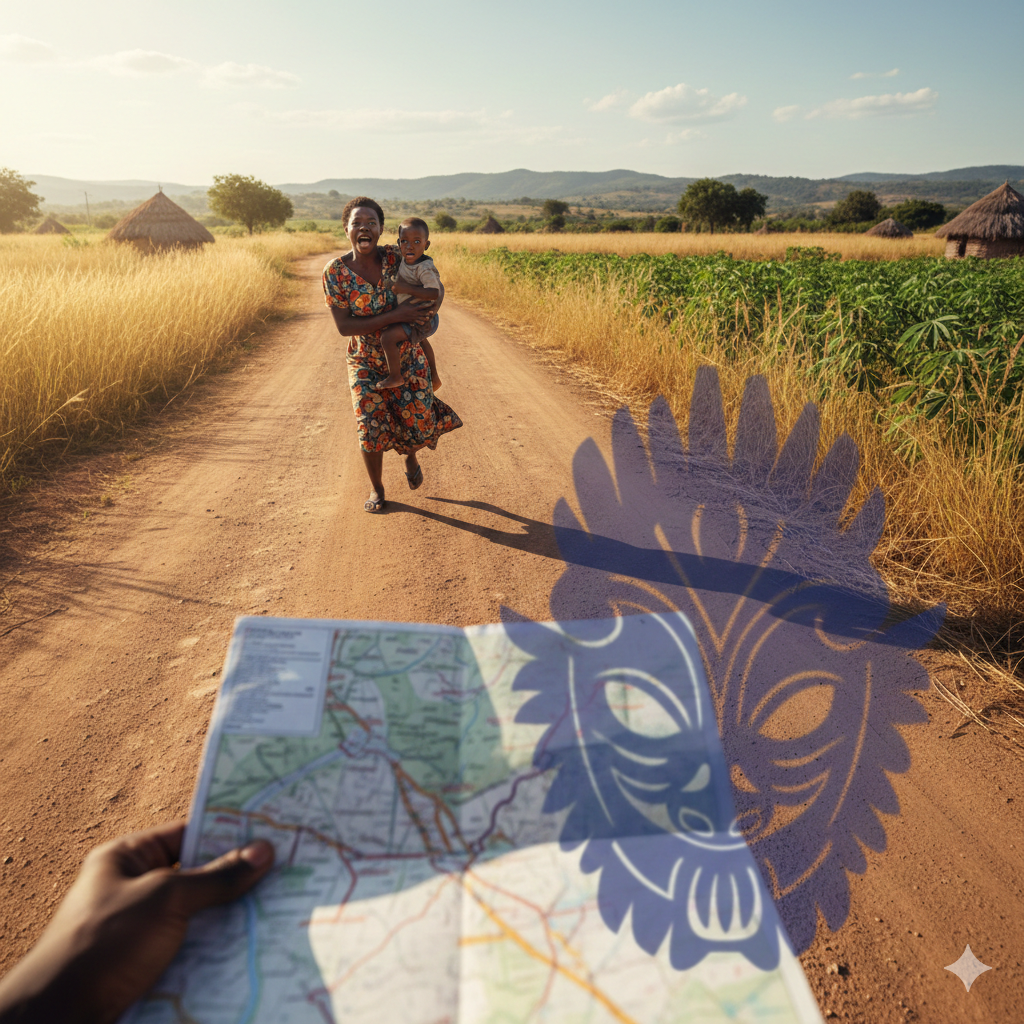
The harvested organs are ground up, mixed with potent powders or plants, and taken as charms promising success — in love, money, health — or, more darkly, used to bring misfortune upon some victim. These stories, repeated often in the media, have created a kind of collective psychosis. In rural areas near the South African border, the sight of a white man stopping to ask directions – as happened to me several times – can send women and children fleeing into the fields, screaming and stumbling through the long grass in panic.
As these reports circulate, they give rise to stranger, more fantastical beliefs. Some claim that white South Africans kidnap Mozambican children and use their body parts as bait for deep‑sea game fishing. Others insist that certain Mozambican net fishermen tie extract human eyes to the tops of their nets as a supernatural lure. These are rumours, not realities — but they travel fast, and they shape behaviour.
In this way, male genital organs share an unexpected kinship with the rhino horn: both are prized not for what they are, but for the power people believe they can confer. In these parts of Africa, you see how stories can shape attitudes as forcefully as reality itself.